A Note from the Heart of the Executive Director


My response to Africa is emotional. It has always been this way and I cannot envision it being any other way. Some of the very people I love most on this planet are indeed Africans. For this reason, I have a personal investment in the project. They are responsible for teaching me the wisdom of the ages – ancient memories of courage and triumph and suffering and an understanding which is only born from losing everything you have. The Africans have taught me this...

My personal struggle with Africa has always concerned human rights and my journey into the Continent has always concerned their human rights. Suffering on the planet it not limited to those who are bearing injustice; rather, we all share the pain when others are suffering. This is the balance of our mother earth.

It has never seemed natural to me that one part of the world should have abundance while others are drinking water with animal feces floating in it. I refuse to accept as commonplace the nagging sensation of hunger that those I love and live amongst in Africa are used to and have lived with their entire lives.  They are so accustomed to this lifestyle that they don’t know any other way of living. The injustices brought upon men and women by corrupt governments and abysmal ‘leaders’ compounded by the injustices brought unto women by their own fathers, husbands and sons leaves me feeling empowered to do more and to work harder to bring some of the light we experience in the U.S.A. with clean water, abundant food and human rights to civilians of both genders in Africa.

Proudly, this has always been the foundation upon which SSAAP has rested.

Thank  you for helping me to help the Africans and thank you for enabling me to help them. I do believe that in this mutual enlightenment which comes through helping our brotherly strangers we are changing the vibrancy of a planet which hungers for universal love. 


SSAAP PROJECT MISSION
To alleviate starvation by securing a sustainable water source; helping to promote sustainable

agriculture and nutrition, as well as promoting empowerment through income-generating activities

rooted in selling surplus products of indigenous artisans and community groups.

----


SSAAP is a 501(c)3 is a not for profit organization, ID #: 27-2033029.

All donations are tax-exempt through SSAAP.

SSAAP is registered under GuideStar.

 
Project Vision
  • To alleviate hunger and to improve nutrition by developing a water source to enable planting of community gardens and to use the excess produce grown to feed families
  • To encourage local income-generation at the grassroots level through vegetable-growing, bee-keeping, traditional African medicine and arts & crafts
  • To work with local artisans to preserve traditional arts in Zambia and in Sierra Leone:
  1. Traditional Tonga wooden art, jewelry and basket-weaving found near the lower Zambezi River in Zambia, Sub-Saharan Africa
  2. Sierra Leone, West African artisans specializing in batik and painting
  • To increase interest in empowering both women and men, individuals and groups and to uplift the living standards of the people
  • To procure and source sustainable water, agriculture and nutrition in rural village communities
 
Description of Project

alt

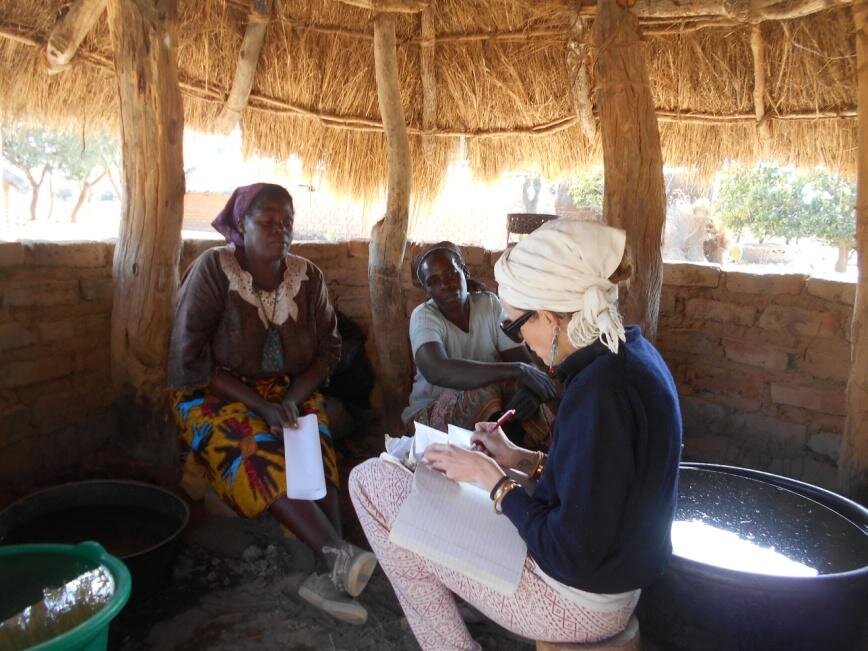
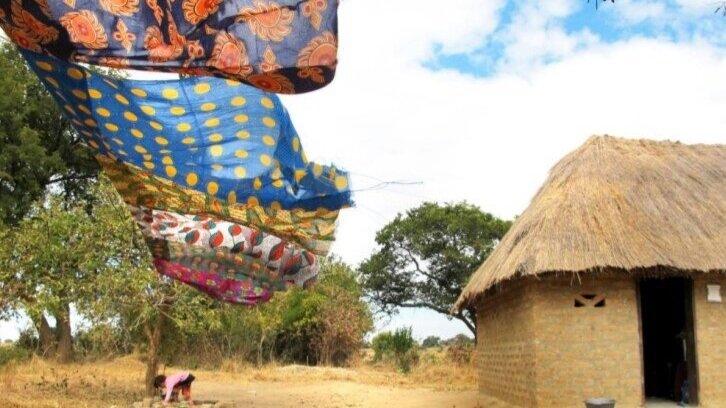
Simwatachela Chiefdom - located approximately eighty kilometers from the rural town of Kalomo, in the Southern Province of Zambia, is a hard-working, industrious community. Simwatachela is the project base, thus the project deriving its namesake as Simwatachela is the origin of the project. However, the project is not limited only to Simwatachela. 

SSAAP's Project Director and Founder, Heather Corinne Cumming, was a Peace Corps Volunteer in Simwatachela, Zambia from 2005-2006. To date, she has lived within this community for nine years, and both she and her daughter speak the local dialect, called ciTonga - although her daughter speaks much more fluently than Ms. Cumming. After finishing her service in the Peace Corps in 2006, she vowed to herself - along with partners in the project Marles Kanyawinyawi and Gibson Sinan'gombe - that her work in Africa was far from being finished. In April 2008, she had her opportunity to recommence life in the village when the community headmen of three adjacent villages in Simwatachela: Sibooli-B, Siamabwe and Simoono, granted the project 140 hectares of virgin land specifically for the purpose of starting a sustainable agricultural program with potable water in order to feed both the people and the cattle. Traditionally, the Tonga tribe in Zambia is the peoples responsible for rearing of cattle, and are thus quite proud and famous both for this. 

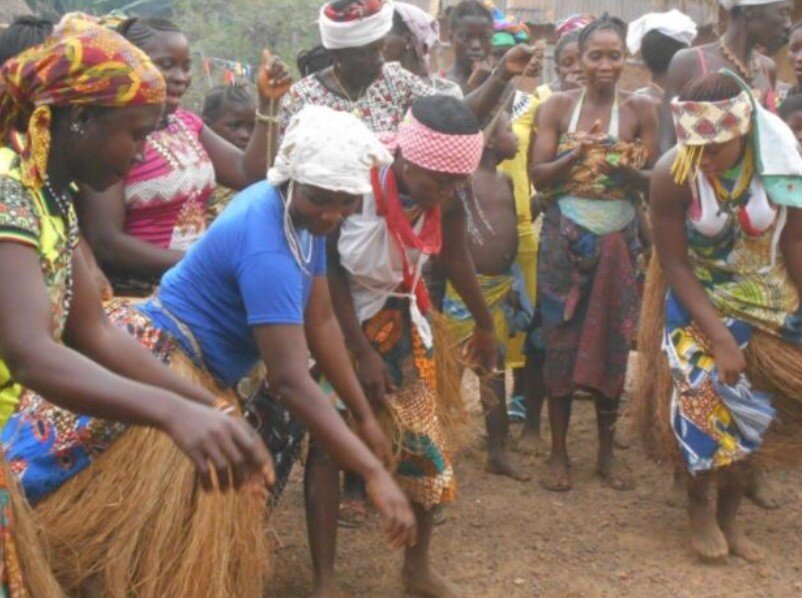
Heather's daughter, Radiance Gaia Amara Cumming, is Sierra Leonean by tribe, and is a Krio by birth. Her father, Nathaniel Fume Jones, resides in Freetown, Sierra Leone. Thus, since the project's origin in 2008, it seemed only natural to Ms. Cumming to consider both of her homes in Africa to aid with resources, education and water: Zambia and Sierra Leone. 

According to Oxford University - UN, Sub-Saharan Africa is the poorest region in the world, followed by South Asia, according to a new measure developed by Oxford University, with support from the U.N.

The measure, called the Multidimensional Poverty Index, or MPI, will replace the Human Poverty Index in the United Nations' upcoming Human Development Report.

For the past 13 years, the U.N.'s annual report has used the Human Poverty Index, which employs three basic dimensions -- length of life, knowledge and standard of living -- to measure poverty in developing nations.

But in 2013, the U.N. will use Oxford's Index: a "multidimensional picture of people living in poverty" that complements income measurements "by reflecting a range of deprivations that afflict a person's life," including whether a household has a decent toilet, clean water to drink within 30 minutes on foot, electricity, school-aged children enrolled in school and whether any member of a household is malnourished, say researchers.

A household is counted as "multidimensionally poor" if it is deprived of over 30 percent of the ten indicators used by the MPI. Of the 25 poorest countries researchers surveyed, 24 are located in Africa.

According to the MPI, the 10th poorest country in the world is Sierra Leone, averaging 81.5% Living In Poverty, 
53.4% Living On At Least $1.25 A Day, and 52.3% Deprived Of Drinking Water. 

Source: http://www.huffingtonpost.com/2010/08/03/the-10-poorest countries_n_668537.html#s122175&title=10_Sierra_Leone.

According to the World Bank, (http://www.worldbank.org/en/news/feature/2012/12/19/zambia-economic-brief-recent-economic-developments-and-the-state-of-basic-human-opportunities-for-children):

  • Zambia’s economy is growing faster than the economies of most of its mineral-producing and non-mineral producing peers
  • Economic growth has been led by a strong performance in mining, manufacturing, services and agriculture;
  • Despite strong economic growth in the last decade, Zambia has made very little progress in reducing poverty and providing basic opportunities for children still remains a challenge

Zambia is ranked 164th out of 187 countries on the Human Development Index (HDI) for Low Human Development in 2012, Sierra Leone ranking 180th out of 187 countries. 

In Zambia, food production levels vary significantly from year to year. Food security is fragile because subsistence farmers depend on rainfall and traditional hoe cultivation. Even in years of national food surplus, many subsistence farmers or households struggle.

The HIV/AIDS epidemic has exacerbated food insecurity levels, contributing to a decline in socioeconomic activity. HIV/AIDS is also both a cause and a consequence of household food security in Zambia. Around 17% of adults aged 15-49 years are HIV-positive and life expectancy is only thirty-seven years. HIV/AIDS undermines the capacity of people in most rural areas to produce enough food for their families. Malnutrition is present to varying degrees in most communities nationwide.

And although Sierra Leone has plentiful natural resources, the decade-long civil war severely devastated the country's economy, destroyed infrastructure and caused large-scale human suffering. In 2008, Sierra Leone ranked 84 out of 88 countries in the Global Hunger Index (UN) and last out of 179 countries in the Human Development Index. In 2007, Sierra Leone was rated the most unlivable country in the world.

We are happy to report that the nation seems to be improving since that time.

Some forty percent of all children in Sierra Leone below age five are chronically undernourished which places them at high risk to be able to meet their full physical and mental potential. Acute child malnutrition is at an alarming ten percent. Every fourth child dies before reashcing the age of five. Poverty remains pervasive with more than two-thirds of the population of about six million living below the poverty line. Without funding, unemployment - especially among the youth -, as well as low labor productivity, lack of irrigation, over-harvesting and adequate access to food markets as a result of poor road infrastructure continue to be risks to survival.

Open the detailed version of the SSAAP project description (PDF)


Upcoming Events

No current events.

Search

Donate

Please consider donating to SSAAP. Any donation will help. No donation is too small.